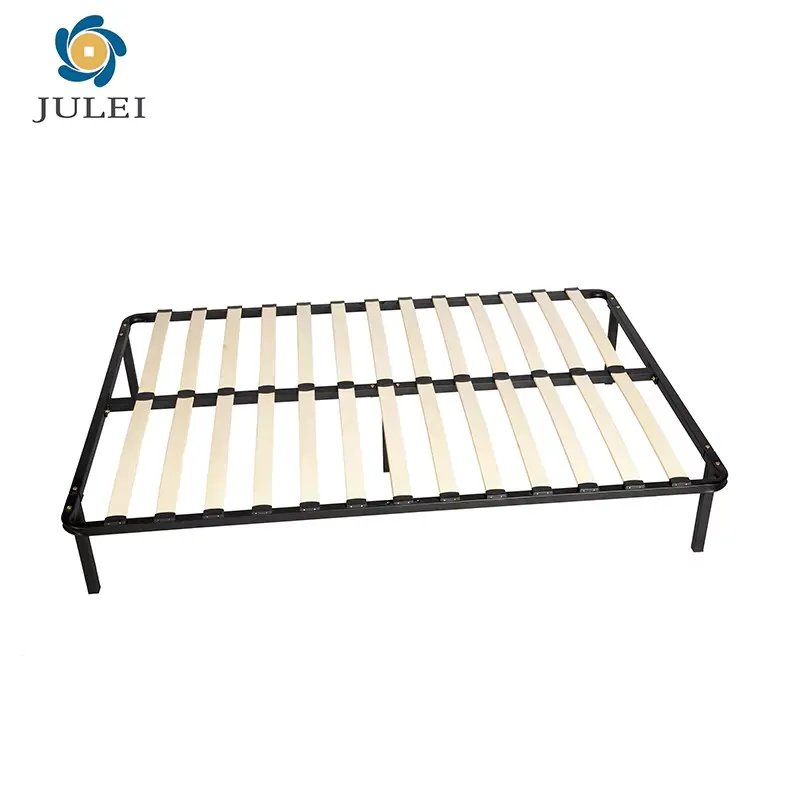
Schnelle Antwort: Choose a metal bed frame manufacturer by verifying factory credentials, Klärung der OEM/ODM-Fähigkeiten, Vergleich von MOQ und Lieferzeiten, Anfordern von Mustern vor Großbestellungen, und Durchsetzung von Qualitätskontrollen nach AQL-Standard in jeder Produktionsphase.
Sourcing Großhandel mit Bettgestellen aus Metall at scale is not a price comparison exercise. Importeure, Großhändler, and upholstery brands that skip due diligence risk delayed shipments, inconsistent quality, and costly rework. The global metal bed frame market is increasingly competitive, with factories across China, Vietnam, and India targeting the same export lanes.
Differentiating on sourcing quality, not just unit cost, is what separates sustainable import businesses from those that repeatedly restart supplier relationships. This guide covers every decision point: supplier classification, RFQ preparation, MOQ negotiation, sample validation, inspection protocols, and defect resolution.
1. Manufacturers vs. Traders vs. OEM Suppliers: What Is the Real Difference?
Direct Answer: A manufacturer owns production equipment on-site; a trader resells factory output without controlling production; an OEM/ODM supplier manufactures to your specifications and holds molds or tooling on your behalf.
| Criteria | Manufacturer | Trader | OEM/ODM |
| Price Transparency | Hoch | Niedrig | Medium–High |
| Customization Depth | Full | Limited | Full |
| Audit Access | Ja | Rarely | Ja |
| MOQ Flexibility | Medium | Hoch | Low–Medium |
| IP Protection | Negotiable | Weak | Strong (with NDA) |
OEM means you supply drawings and the factory builds to spec. ODM means you license or brand an existing design, reducing tooling cost and development time. Always sign an NDA before sharing proprietary drawings, and specify mold ownership in the purchase order.
2. How to Write an RFQ That Gets Accurate Quotes
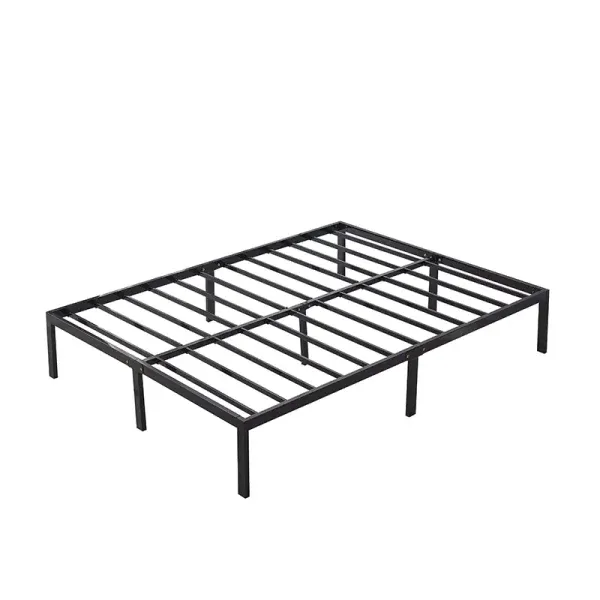
Direct Answer: An effective RFQ must specify dimensions, material grade, load-bearing capacity, surface finish, und Verpackung; vague inquiries produce non-comparable quotes that waste sourcing time.
Essential RFQ Fields
Dimensions: Specify platform size (L × W), floor-to-rail height, headboard/footboard height, and slat spacing. Clarify whether dimensions are interior (mattress zone) or exterior (frame edge).
Material Grade: Cold-rolled steel (smooth, powder-coat ready) is standard for residential frames. Hot-rolled steel is lower cost for commercial use. Include tube profile, Wandstärke (1.2–2.0 mm), and section shape (square, rectangular, runden).
Load-Bearing Capacity: State static and dynamic load requirements. Residential frames typically meet 250–500 kg static; commercial may require 600 kg+. Reference applicable standards: EN 747, ASTM F1085, or BIFMA.
Surface Treatment: Powder coating (RAL color reference, 60–80 micron thickness), electrophoresis (superior corrosion resistance), or chrome plating. Specify salt-spray test requirement (z.B., 500 hours per ASTM B117).
Packaging: Carton specs, inner foam/corner protection, pallet config, and container loading plan (20 ft vs. 40 ft HQ). Export-ready packaging directly reduces in-transit damage rates.
3. Mindestbestellmenge, Tooling Costs, Pricing, and Lead Times Compared
Direct Answer: Custom metal bed frame manufacturer MOQ typically starts at 50–200 units per SKU; tooling fees range $300–$2,000; production lead times run 30–60 days after sample approval.
| Supplier Type | Typical MOQ | Tooling Fee | Unit Price (Queen) | Lead Time |
| Large factory (500+ workers) | 200–500 pcs | $500–$2,000 | $18–$45 | 45–60 days |
| Mid-size factory (100–499) | 50–200 pcs | $300–$800 | $22–$60 | 30–50 days |
| Trading company | 100–300 pcs | Passed through | $30–$80 | 50–75 days |
| OEM/ODM specialist | 50–150 pcs | $400–$1,500 | $25–$70 | 35–55 days |
Tooling is typically a one-time cost amortized across the first run. Negotiate ownership and storage terms in writing. Volume pricing breaks at 100, 300, 500, Und 1,000 units; always request a tiered price sheet. Factor in ocean freight (CBM per unit), port charges, and HS code 9403.50 duties for your target market. Standard payment terms: 30% T/T deposit, 70% against B/L.
4. The Sample-to-Mass-Production Validation Process
Direct Answer: Never commit to full production without a physical sample validated against your RFQ. The standard sequence is counter-sample → pre-production sample → pilot run → mass production, with sign-off at each gate.
Counter-Sample (3–7 days): Supplier provides existing stock closest to your spec. Evaluate material, weld quality, and coating; not for final approval.
Pre-Production Sample / PPS (10–20 days): Built to your drawings and colorway. Test dimensional tolerance (±2 mm), load capacity, coating adhesion (cross-hatch per ISO 2409), and assembly time.
Pilot Run (10–30 units): Inspect before releasing the balance of production. Common failures at this stage: weld spatter, paint holidays, and connector fit inconsistency.
Mass Production: Release only after pilot approval. Enforce inline QC at welding, coating, and packaging stations.
5. AQL Sampling, Third-Party Inspections, and Defect Procedures
Direct Answer: Apply AQL 2.5 for general defects and AQL 1.0 for critical/structural defects. Engage third-party inspection for any order over $10,000 or when working with a new supplier.
| AQL Level | Use Case | Max Defects per 1,000 Units |
| AQL 1.0 | Structural failure, injury risk | ≤10 |
| AQL 2.5 | Dimensional error, major cosmetic | ≤25 |
| AQL 4.0 | Minor surface marks, Verpackung | ≤40 |
Pre-Shipment Inspection Checklist:
- Quantity vs. packing list
- Carton drop test (ISTA 1A or ASTM D4169)
- Random assembly verification
- Load capacity test
- Coating thickness (elcometer)
- Hardware completeness (bolts, Lamellen, tools)
Defect Claim Procedure: Photograph defects with timestamps within 14 days of receipt, cross-reference the inspection report and the approved PPS golden sample, then negotiate one of three remedies: replacement units in the next shipment, a credit note against future orders, or supervised rework at origin before re-export.
Build a 3% quality holdback clause into the purchase order, released only after the post-delivery inspection confirms conformance. Keep records of every NCR (non-conformance report) to identify systemic production issues across orders.
6. Supplier Audit Checklist
Direct Answer: Audit suppliers across five dimensions: legal credentials, production capacity, quality system, Exporterfahrung, and financial stability.
- Legal: Business license with manufacturing scope, BSCI or SA8000 (within 2 Jahre), ISO 9001 (current, not expired), and relevant product certifications including SGS, UL, TÜV, or EN 747. Always verify certificate validity directly with the issuing body.
- Production: Monthly output per SKU, machinery list (CNC punching, laser cutting, robotic welding, automated powder coat line), shift structure, and explicit subcontracting policy; outsourced welding or coating is a common hidden risk.
- Qualität: In-house QC headcount, AQL standard documented and practiced (not just claimed), non-conformance report (NCR) workflow, and verifiable customer complaint resolution track record with response timelines.
- Export: Countries and regions supplied (North America, EU, and Australia each carry distinct compliance requirements), familiarity with CARB, CA Prop 65, REACH, and RoHS where applicable, and demonstrated competence in export packing and FCL/LCL container loading.
- Stabilität: Years in continuous operation, verifiable references from established international clients (not just logo slides), and willingness to offer flexible payment terms as the relationship matures.
Bonus: Tambour Panel Structural Notes for OEM Bed Frame Projects
Buyers specifying headboard panels or furniture-integrated storage often ask about tambour options. Here is what distinguishes them structurally and visually:
Flexible vs. Rigid: Flexible tambour panels use individual slats bonded to a canvas or fiberglass backing, enabling curvature radii as tight as 50 mm. Rigid slat wall panels are fixed to a solid substrate; they cannot flex and suit flat surfaces only. The absence of a rigid substrate is what defines flexible tambour structurally.
Profile Shape and Visual Effect: Half-round (D-shaped) profiles create soft, continuous shadow lines that suit Japandi and organic-modern aesthetics. Rectangular profiles produce sharper, more angular shadow lines for contemporary or industrial design directions. Profile choice directly controls how raking light reads across the panel.
Finish Compatibility by Substrate:
- Flexible MDF tambour: accepts water-based paint, UV-cured lacquer, and veneer overlay; avoid oil-based finishes that penetrate the backing and reduce flexibility.
- Flexible wood tambour (real wood slats): suits natural oil, hardwax oil, and stained lacquer; takes wood stain evenly; dimensionally more stable than MDF in humid environments.
These distinctions matter in OEM metal bed frame supplier projects where surface consistency between the metal frame and panel components is a design requirement.
Frequently Asked Questions
What is the minimum order quantity for custom metal bed frames?
For standard designs with minor branding, MOQ is typically 50–100 units. Fully custom frames requiring new tooling usually start at 100–300 units with a one-time tooling fee.
How long does a custom sample take?
Counter-samples from existing stock: 3–7 days. Pre-production samples to custom drawings: 10–20 days depending on tooling complexity.
What certifications should a metal bed frame manufacturer hold?
ISO 9001, BSCI or SA8000, and product certifications such as SGS, UL, or EN 747. Confirm CARB compliance if wood components are included for the US market.
What is the difference between OEM and ODM?
OEM: you supply the design, the factory manufactures it, full IP control. ODM: you brand an existing factory design, faster to market, lower tooling cost.
What surface treatment is most durable?
Powder coating at 60–80 micron thickness tested to 500+ hours salt spray (ASTM B117) offers the best cost-to-durability ratio. Electrophoresis suits high-humidity or marine environments. Chrome plating is decorative but carries environmental compliance obligations in most markets.
Can I mix SKU sizes in one production run?
Ja, most factories allow size mixing within a model family to reach the combined MOQ. Specify size breakdown in the PO. Queen and King sizes typically differ in price due to material weight.
Work With a Verified Factory
Choosing the right OEM metal bed frame supplier requires systematic validation, not just a price comparison. Verify credentials, document specifications precisely, and run samples through a structured approval sequence before releasing volume production.
Juyubed is a direct factory with 25+ years of production experience, OEM/ODM support across 500+ Entwürfe, BSCI and SGS certification, and an 8-member QC team operating at AQL 1.0/2.5 standards. Products ship export-ready to 100+ countries.
Request a factory quote, sample, or full product catalog: Contact Juyubed at juyubed.com.
Written by an experienced furniture manufacturing and global sourcing specialist. Technical specifications, quality-control practices, OEM/ODM guidance, and applicable product and compliance references reflect current industry practices and requirements as of 2026.